Postural Deviations and Pelvic Torsion
Jun 02, 2026
What happens when things get out of balance?
Naturally, your spine has an S curve. It’s supposed to have a curve. We also want a vertical line from ear to heel that is vertically integrated, where each segment of the body is not far from this vertical central line so that our body can stack and build itself in balance. A good central line creates a functional relationship with gravity.
Postural deviations and spinal disorders can form when your vertical (your natural S curve from the side view) gets too curved. We want a healthy sacral, lumbar, thoracic, and cervical curve in the spine. To have full function and mobility of the spine, having balance in the pelvis is essential.
Depending upon your specific unique anatomical characteristics and your signature moves, your body has developed patterns and postures that reflect balance and imbalance. What movement patterns are you holding in your body? How do you bend? Where is your fulcrum? Where do you hinge when you bend down to the ground? How do you stack the segments of your body?
When one part of your body becomes more responsible for supporting a movement, that joint can become stressed. It can micro tear at the ligaments, the disc can bulge, it can become weak or atrophied, it can lose its ability, or it can become dense, hardened, and tight, which limits the range of motion and the necessary components to maintain health in that part of your body. If these conditions are not addressed, they worsen over time.
Pelvic torsion is a thing. During torsion, the pelvis tips forward on one side and, in the same place on the other side, it tips back. The result is torsion: a shearing that occurs inside of the pelvis between the fascial layers. It’s like a twist, with one side twisting one way and the other side twisting the other way. In between the twist, increased tension and pressure become more bound up the more uneven the hips become.
When tissue becomes too taut and pulls too tightly, one side becomes hyper tense and the other side becomes hyper lax or overstretched.
What happens when we favor a hip? Leaning, especially to the outer edge of one hip, can be a habit, a movement pattern, an anatomically or structurally short leg, trying to avoid pain, or compensating for an injury.
Favoring one hip and using it to bear more than its fair share of weight creates uneven hip height. Imbalance in the pelvis can cause torsion in the pelvis. Uneven hip height can cause a domino effect of misalignment. This can be from the pelvis moving inferiorly (down) toward the knee and ankle or superiorly (up) toward the ribcage, neck, and head. It can also be because of an injury below the hips, and the alignment of the hips may be from a past or current injury in the ankle, knee, or hip.
Our spinal health is dependent on our pelvic balance. What does hip height have to do with spinal alignment? In the pelvis, it’s extra important to have balance and symmetry because this is the seat of the spine. The symmetry of the base of the spine is important because we want a solid, even foundation to build from.
Our central nervous system is housed and branches out from the vertebrae. When our spine is in alignment, our nervous system functions well. This means the nerves that relay information to our extremities (our arms and legs) will be able to function. When we have problems with our low, mid, and upper back, ribs, arms, neck, shoulders, or anything above or below the hips, it can be from this uneven tension—the torsion in the pelvis.
If we looked at our spine like a tree, we would see the trunk as the central column of the spine. Each vertebra branches the nervous system to the left and right. The base of the trunk that stabilizes the tree is the sacrum and the lowest five lumbar vertebrae. The root system branches out and stabilizes the whole tree. The legs and feet can be considered the tap roots, and all the nerves that innervate the legs and feet weave between bones and connect us to our support system, our roots to the earth.
From the central column, the branches of the nervous system move out to provide for the parts they are responsible for. Every part of your body has nerves that begin in the spinal cord and travel through each vertebra. We want our spine to be in alignment so these branches are not impinged and can function properly. When vertebrae are out of place, it can cause dysfunction not only to that specific area and that which it innervates, but it also can impact the function of the central nervous system.
Your tissue is living; it changes and adapts to the movements that it makes, the positions that it takes, and how it is asked to support you. When things get out of alignment, it is because our fascia is being pulled by a strong force that oftentimes gains in tension over time.
Fascial restrictions cause pain, swelling, and a limited range of motion. Fascia is wrapping every cell of your body and can have up to 2,000 lbs of pressure per square inch. This kind of pressure on the small sensitive structures that lie within and are woven into the fascia can create pain, swelling, hot, hard, dense tissue. Lumps, adhesions, stiffness, aches, tightness, lack of flexibility, and loose sagging tissue are all signs of fascial restriction.
If we do not address the myofascial connective tissue, chiropractic, acupuncture, and other modalities will not hold. The results of these modalities will be temporary. The tissue is what is pulling the bones out of place and causing the symptoms that you are seeking treatment for.
I myself see a chiropractor and an acupuncturist from time to time, and I support the important work they do. And I know that what is causing my bones to shift out of place is the connective tissue. Restrictions in the fascia are what are creating my tension patterns. I know I need to address these tension patterns to really get to what is causing the misalignment.
Myofascial Release is a gentle, effective hands-on therapy that releases myofascial restrictions. I work as an injury specialist and see clients who are ready to create space and freedom in their bodies. I work with people who know how important preventative medicine is. They are athletes, they are in tune with their physical structure, and they want to self-preserve and support their highest potential. I can help you get back to living your best life.
I treat those who have severe and chronic pain, and oftentimes I am their last-ditch effort to find answers. I have clients who have restored function in ways that at one time I would have been astonished by. Today, it’s just another day at the office helping people walk again, to be able to sit down, to be able to get up, to hold their grandkids, to grip the garden tools, to plant their feet firmly on the ground, and to stand four inches taller with their head over their shoulders.
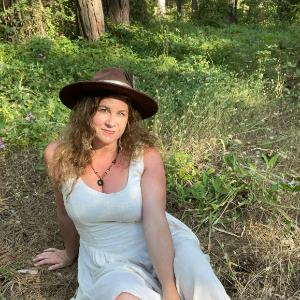
Angela Rose is a Myofascial Release Therapist and an Injury Specialist. She treats clients in Grass Valley at Sol Bodyworks. Her clients find relief from chronic conditions so they can get back to an active, pain-free life doing what they love.
You can find Angela at solbodyworks.com.
Author